
 United Kingdom
 China
China Hong Kong SAR
 India
India Indonesia
 Japan
Japan Malaysia
 Singapore
 Taiwan
 Thailand
 Turkey
Dubai’s handover wave is here - Which communities could see the biggest property impact in 2026?
Dubai’s 2026 property story is becoming less about what developers have launched and more about what is actually reaching completion.
That distinction matters. A project being announced, under construction or marketed with a 2026 handover does not necessarily mean those homes will enter the market at the same time. Dubai Land Department’s project-status system tracks each registered development by completion percentage, project status and expected completion, giving buyers and investors a more useful way to follow what is actually happening on the ground.
And the numbers show that handovers are already gathering pace.
Dubai’s 2026 Property Handover Wave at a Glance
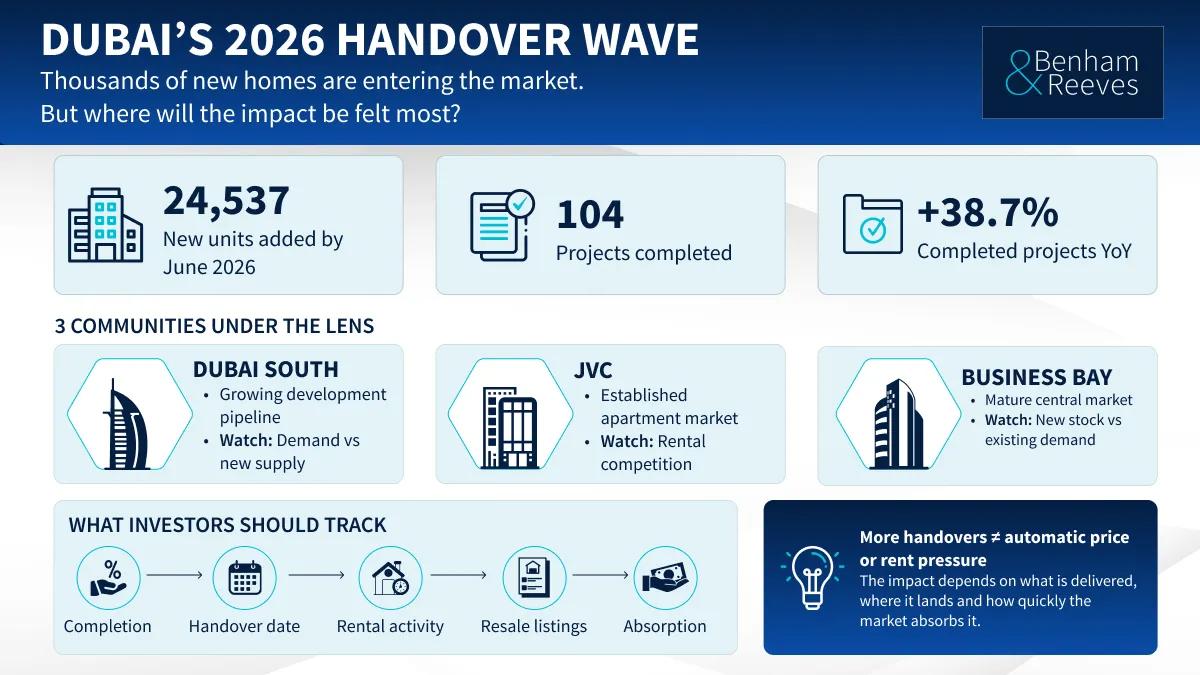
According to Dubai Land Department, 104 real estate projects were completed by June 2026, adding 24,537 units to Dubai’s property market. The number of completed projects was 38.7% higher than during the same period in 2025, while the number of new units increased by more than 36%.
| DLD measure | Position by June 2026 |
|---|---|
| Completed projects | 104 |
| New units added | 24,537 |
| Growth in completed projects | +38.7% year-on-year |
| Growth in new units | 36%+ year-on-year |
For a broader look at Dubai’s market this year, see our Dubai property market in 2026.
But the city-wide number only tells part of the story. The more useful question for an investor is: where are those completed and soon-to-be-completed homes concentrated?
Which communities are seeing the biggest 2026 handover pipelines?
There is an important caveat here. DLD does not publish a single official league table ranking Dubai communities by their total scheduled 2026 handovers.
Instead, its open-data platform allows users to examine registered projects by area and project status, including the project's total units, completion date and percentage completed.
That makes community-level analysis possible, but it also means investors should be wary of neat rankings based purely on developer announcements or third-party estimates.
For a project expected to hand over in 2026, the more useful checks are:
| What to check | Why it matters |
|---|---|
| Project status | Shows whether construction is progressing |
| Completion percentage | Helps distinguish an active pipeline from a distant delivery |
| Expected completion date | Indicates the current registered timeline |
| Total units | Shows the potential size of the incoming stock |
| Area | Allows comparison with existing rental and resale markets |
DLD's Project Status service can be searched by project name or number and provides project and developer information, completion details and inspection information.
Dubai South: A community to watch as Development accelerates
Dubai South is particularly interesting because its property story is tied to the development of the wider district rather than simply the delivery of individual residential buildings.
For investors, that makes absorption more important than the headline number of new homes.
As more projects move towards completion, the question is whether new residents, businesses and infrastructure are developing alongside them. A growing community can accommodate new stock differently from an established neighbourhood where several completed buildings immediately compete for the same pool of tenants.
DLD's own 2024 annual report identified Dubai South among the emerging districts with future infrastructure potential, alongside areas including Meydan and the JVC expansion.
JVC: What happens when more apartments become available?
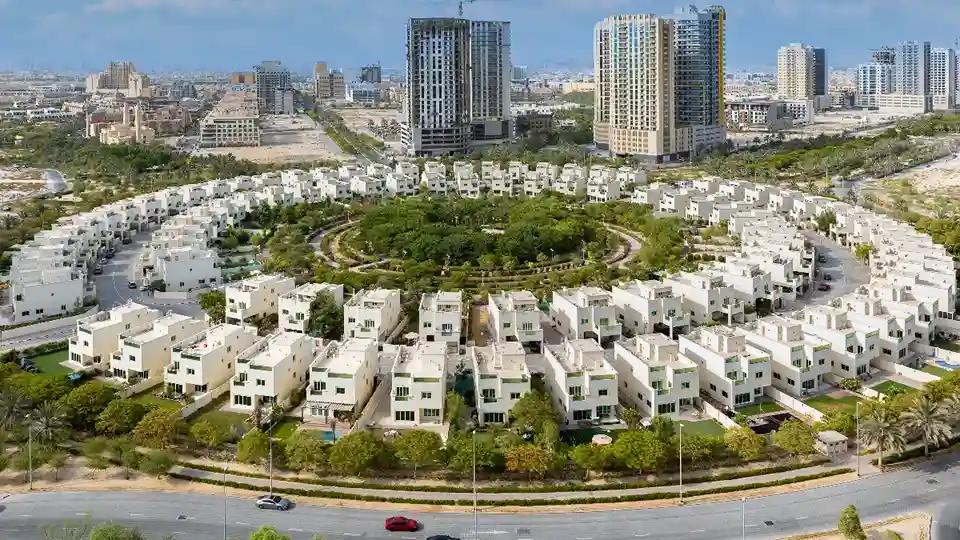
Jumeirah Village Circle is a different proposition because it already has a large residential base and an established apartment market. That makes the handover story particularly relevant to landlords.
When newly completed apartments become available, tenants gain more choice. For owners, this can make the details of the property more important: furnishing, condition, location within the community and the asking rent can all affect how quickly a unit is leased.
DLD's historical market data has consistently identified JVC among Dubai's active apartment markets. Its 2023 sales data, for example, listed JVC among the most searched areas for apartment purchases.The takeaway is not that additional supply will automatically push rents down. It is that competition between comparable properties becomes more relevant when new units enter an already active apartment market.
Business Bay: Does established demand change the equation?
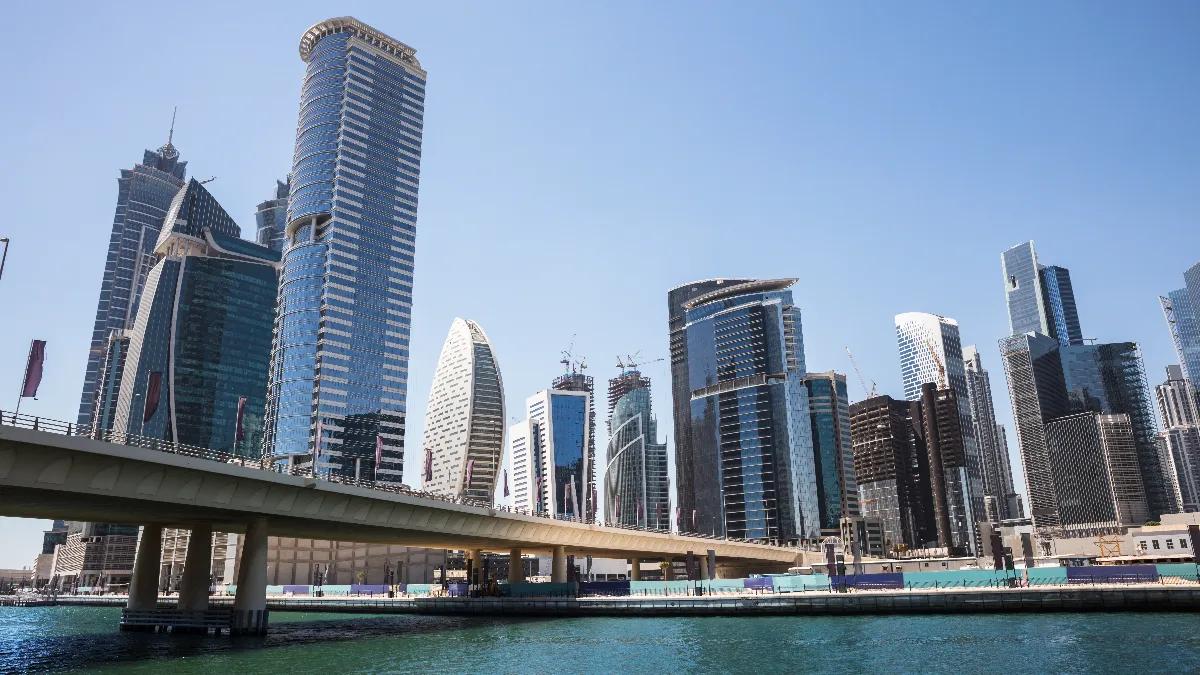
Business Bay offers another useful contrast.
It is an established central community with both residential and commercial activity, so new residential stock enters a market that already has an active tenant and buyer base.
DLD's rental data has previously placed Business Bay among Dubai's leading areas for registered rental transactions.
That means the impact of new handovers cannot be judged from supply alone. Investors need to look at whether new units are being absorbed through sales and leasing, and whether comparable ready properties are accumulating on the market at the same time.
Which communities could see the biggest rental and resale impact?
Rather than assigning a ranking without an official DLD dataset to support it, investors can look at the three communities through the same set of questions:
| Community | Incoming stock | Existing market | Key question |
|---|---|---|---|
| Dubai South | Growing development pipeline | Expanding residential base | Is demand growing alongside new completions? |
| JVC | Apartment-led residential market | Established tenant base | Will landlords face more competition for tenants? |
| Business Bay | Ongoing residential development | Established central market | Can existing demand absorb newly completed units? |
This is also why Dubai property supply 2026 should not be treated as one uniform figure. Two communities can receive similar numbers of new homes and experience very different market effects depending on the type of property, existing inventory and strength of demand.
What should investors watch as more projects handover?
For investors assessing a property before or around handover, five DLD-linked indicators are particularly useful:
- Actual project completion: Has the development reached completion, or is the advertised handover still only an expected date?
- Completion percentage: How far has construction progressed?
- Rental activity: Are comparable properties being leased, and at what achieved rents?
- Resale inventory: Are more owners listing similar units at the same time?
- Absorption: How quickly are newly completed properties being sold or rented?
DLD also notes that expected completion dates and project completion rates are periodically reviewed and updated through RERA's project-monitoring process.
Final thoughts: Where will the handover wave matter most?
Dubai's 2026 handover story is therefore not simply a question of how many homes are being completed.
It is a question of where they are, what type of homes they are, and what the local market looks like when the keys are handed over.
The official data already shows that thousands of new units have entered Dubai's market during the first half of 2026. But at community level, investors need to go one step further and check individual project status, completion rates and local transaction and rental activity.
That is ultimately what will determine whether a new handover becomes another source of competition or simply another addition to a market capable of absorbing it.
At Benham and Reeves, our team helps investors assess project statuses, completion timelines, and hyper-local transaction data to determine whether a project faces localized competition or strong market absorption.

View all posts by Leanne Ruscoe
Benham and Reeves UAE
BRITISH OWNED & OPERATED
Mohammed Bin Rashid (MBR) City, Dubai
City of Arabia, Dubai
Downtown Jebel Ali
Hudayriyat Island, Abu Dhabi
Waterfront near Yas Island
Sign up to our newsletter
SubscribeLatest news

Dubai’s Rent Now, Pay Later Scheme - How DLD’s new model could change the rental market
Paying rent in Dubai could soon look quite different. A new Dubai Rent Now Pay Later model being developed by...
How to check your Dubai property project status - A guide to the DLD's "Mashrooi" Service
Buying an off-plan property in Dubai usually comes with waiting periods or even years before the development...
Binghatti’s architectural revolution - Why Branded Residences (Bugatti, Mercedes-Benz) are dominating the Skyline
Dubai’s skyline has always been a showcase of ambition. But the latest shift is less about building taller and...
Dubai real estate investment guide
Download our free guide to real estate investment in Dubai. A comprehensive guide designed to facilitate your real estate purchase and get the best return on investment.